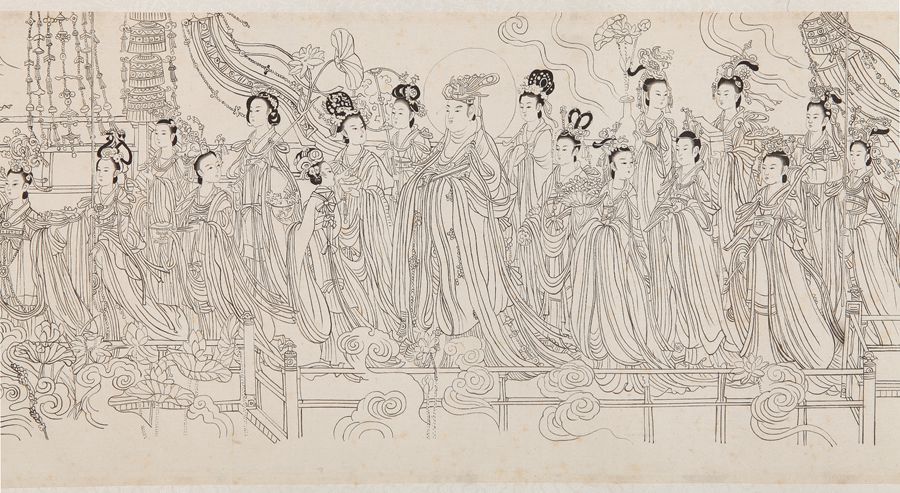
Pu Xinyu (Puru)
Introduction
Pu Xinyu, also known as Puru, was a prominent figure in modern Chinese fine arts, born in 1896 and descending from the Qing Dynasty's imperial Aisin Gioro clan. His contributions to painting, calligraphy, and poetry earned him significant acclaim, paralleling the artistic stature of his contemporary Zhang Daqian. Together, they were renowned as "Zhang from the South and Pu from the North," signifying their respective influences across different regions of China in the early 20th century. A grandson of Prince Kung Yixin, Pu Xinyu's upbringing in an aristocratic environment enriched his exposure to classical Chinese art and culture, which became the cornerstone of his artistic style.
Early Life
Pu Xinyu was born into the illustrious Aisin Gioro clan, a lineage of the Qing Dynasty's royal family. He was a grandson of Prince Kung Yixin and a cousin of Puyi, the last emperor of China. His early life was steeped in the rich cultural and artistic traditions of his family. Prince Kung's Palace in Beijing, where Pu Xinyu grew up, housed an extensive collection of classical Chinese art and literature, providing him with an invaluable foundation in these fields. This environment fostered his talents and laid the groundwork for his future endeavors in painting, calligraphy, and poetry. As a child of the Qing aristocracy, Pu was exposed to a rigorous education that emphasized traditional Chinese virtues and artistic disciplines.
Education
Pu Xinyu's education was deeply rooted in the classical Chinese cultural legacy. The rich artistic environment of his familial residence allowed him to absorb a wealth of knowledge in literature, history, poetry, calligraphy, and painting from a young age. This immersion in the arts was further cultivated through formal educational pursuits, although specific details about his academic institutions are scant. The cultural and intellectual milieu of Prince Kung's Palace, along with his royal lineage, positioned Pu as a custodian of ancient Chinese traditions. His educational journey was characterized by a harmonious blend of scholarly learning and personal artistic exploration, which shaped his distinctive artistic philosophy and methodology.
Career
Pu Xinyu's career spanned the tumultuous period following the collapse of the Qing Dynasty in 1911. Despite the decline in fortunes for many members of the royal clan, Pu devoted himself to his artistic and scholarly pursuits. His move to Taiwan in 1949 marked a new chapter, where he established himself as a respected painter and teacher. Pu's works encompass a range of genres, including landscape, figure painting, bird-and-flower compositions, and equestrian art. His paintings are characterized by their scholarly grace and the serene, sometimes melancholic, worlds they depict.
Artistic Style and Philosophy
Pu Xinyu's artistic style is a testament to his deep reverence for traditional Chinese art forms. His works often reflect the classical techniques and aesthetics he absorbed during his formative years. Pu synthesized various styles from ancient Chinese art, creating a unique artistic voice that was both innovative and deeply rooted in tradition. His philosophy emphasized the importance of drafts and sketches as foundational elements in the evolution of his final artworks. This approach highlights his meticulous attention to detail and his commitment to the authentic expression of his artistic vision.
Major Works
Pu Xinyu's oeuvre is vast and varied, encompassing calligraphy, paintings, drafts, and sketches. His works are held in high esteem and are curated in prestigious institutions such as the Prince Kung's Palace Museum, the Hunan Museum, and the Capital Museum. Notable among his masterpieces are his horse-themed paintings, which reflect his affinity for equestrian subjects and his mastery in capturing the spirit of these majestic creatures. Pu's major works are celebrated for their technical excellence and their ability to evoke a sense of introspection and aspiration.
Teaching and Influence
Pu Xinyu was not only a prolific artist but also an influential teacher. He shared his knowledge of classical Chinese ink painting with students in Taipei, nurturing the next generation of artists. Among his notable students was Chiang Ming-shyan, who later developed a visual language that blended Chinese ink art with Western painting techniques. Pu's teachings have had a profound impact on the artistic community and his works continue to inspire collectors and art enthusiasts.
Legacy and Honors
Pu Xinyu's legacy as a master of Chinese fine arts is enshrined in the exhibitions and collections that celebrate his contributions. Museums across China and abroad have curated his works, ensuring their accessibility to future generations. His artistic achievements have been recognized through various exhibitions and research initiatives, including those held at the Prince Kung's Palace Museum, which has become a pivotal institution in the study of his art. Pu's enduring influence is evident in the continued appreciation of his works and the reverence with which he is regarded in the annals of Chinese art history.








